
Marvin NC Concrete Pouring: Best & Worst Seasons
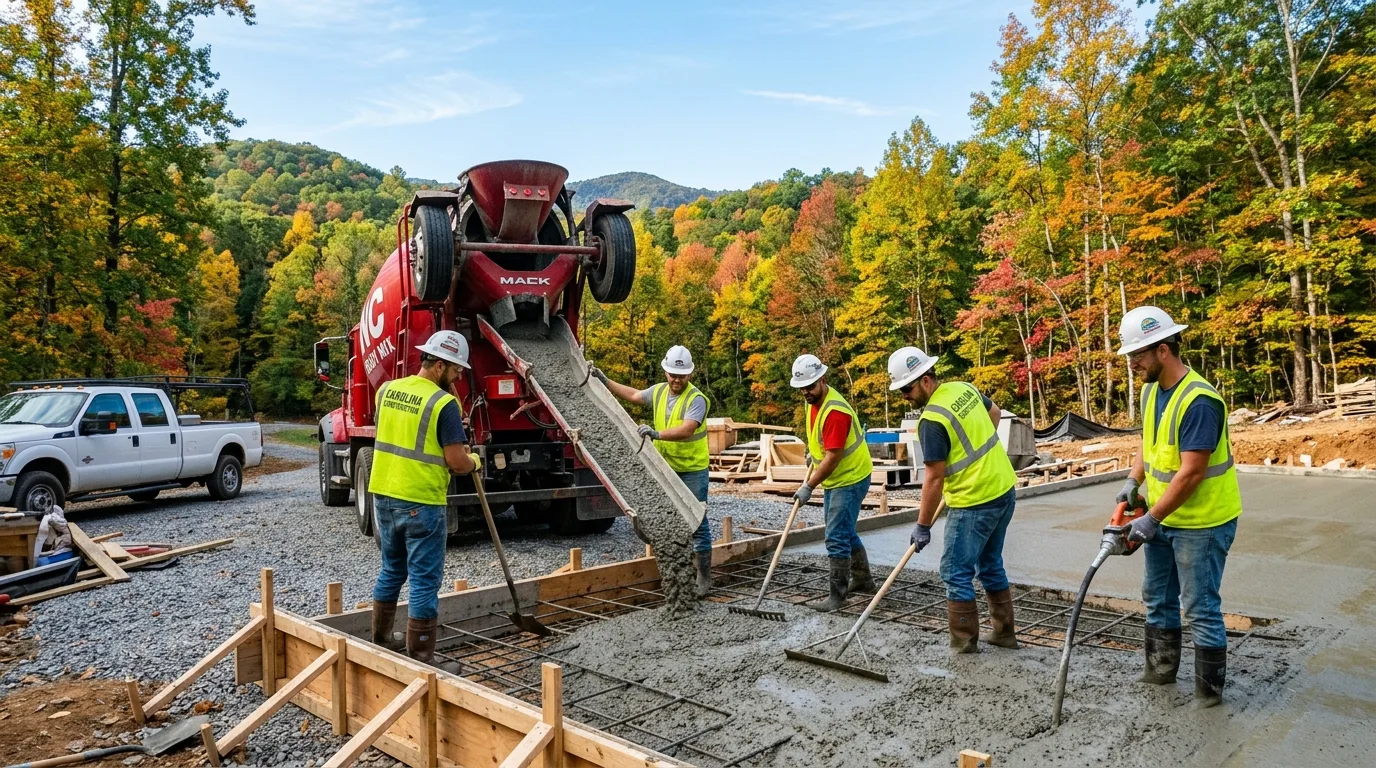
Every season presents a different challenge for concrete work in Marvin, NC — and the difference between a driveway poured in the right weather window and one poured at the wrong time can be 10 years of service life. This post covers the optimal and problematic seasons for concrete work in the Charlotte and Union County area, what the research says about Marvin’s specific climate, and what contractors do differently in challenging conditions.
Schedule Your Marvin Concrete Project Wisely
We work around optimal weather windows — free estimate and seasonal availability check.
Why Marvin’s Climate Creates Distinct Seasonal Windows
Marvin sits in USDA Hardiness Zone 8a at the southern edge of North Carolina’s Piedmont, giving it a climate that is neither fully southern coastal nor fully mountain — humid subtropical summers, cool winters, and 44.8 inches of annual rainfall distributed fairly evenly across all months. This climate profile creates clear optimal windows and clearly problematic seasons for concrete work, and understanding the reasons behind each helps homeowners plan projects and evaluate contractor explanations.
Concrete’s strength development is temperature-dependent. The chemical hydration reaction that transforms wet concrete mix into solid stone proceeds optimally at 50–75°F. Below 40°F, hydration slows dramatically; below 32°F it stops and freeze damage can occur before the concrete reaches sufficient strength. Above 90°F, the surface dries faster than the interior — creating differential stress that causes surface cracking and curling.
The Best Season: Spring (April–May) in Marvin
Spring is Marvin’s most reliable window for concrete work. April and May bring average temperatures in the 55–75°F range, moderate humidity, and relatively predictable dry-weather windows. May is also Marvin’s driest month (2.9 inches average), reducing the risk of rain disrupting a pour or washing cement from fresh concrete surfaces.
Spring concrete cures at an even pace throughout the slab depth, building consistent strength from surface to bottom. Contractors can work normal hours without the early-morning-only scheduling that summer heat demands. Decorative concrete work — stamped patios, exposed aggregate driveways — benefits especially from spring’s forgiving temperature window, giving crews adequate time to stamp, texture, and detail the surface before the concrete stiffens.
The Second-Best Season: Fall (September–October)
Fall closely matches spring in conditions for Marvin concrete work. September and October temperatures average 60–80°F — comfortable working conditions with low humidity and good dry-weather reliability. Rainfall decreases significantly from August’s 4.7-inch peak, giving contractors better scheduling certainty.
Fall is often the right time to schedule projects that couldn’t be done in spring due to contractor availability or project timing. October is consistently one of the driest and most comfortable months in Marvin, making it an excellent window for large driveway projects or stamped concrete patios that require extended working time.
Practical Uses: Seasonal Concrete Strategies
- Spring pours: Schedule early in April if possible to avoid May’s contractor rush; allow 28 days of cure before applying sealer or placing heavy furniture.
- Summer pours: Require early morning start (before 7 AM); use retarding admixtures to extend working time; apply wet curing blankets immediately after finishing; avoid weekday afternoon pours above 90°F.
- Fall pours: Excellent quality; check forecasts for early frost — a frost event within 48 hours of a pour requires insulating blankets even in October.
- Winter pours: Use calcium chloride accelerator ($7/yard) and hot water ($9.30/yard); cover with insulating blankets rated for the expected overnight low; do not schedule when temperatures will drop below 20°F within 48 hours.
- Rainy season awareness: August is Marvin’s wettest month (4.7 inches). Monitor 72-hour forecasts before any pour — rain on fresh concrete washes cement paste from the surface, weakening it and causing discoloration.
- Freeze-thaw transition periods: March and November can bring unpredictable temperature swings in Marvin. Schedule concrete work mid-month rather than at the beginning when late cold snaps are more likely.
Summer Concrete in Marvin: Challenges and Solutions
Summer is the most challenging season for concrete work in Marvin — but it is not impossible. Marvin experiences 48.1 days above 90°F annually, and July’s average high reaches 90.6°F. In these conditions, the concrete surface can begin to set before screeding and finishing are complete if pours are not managed carefully.
Experienced concrete contractors in this market adapt summer pours with a combination of techniques. Early morning starts — pours beginning at 6–7 AM — capitalize on cooler temperatures and lower wind speed before the day’s heat builds. Retarding admixtures slow the initial set, giving crews additional working time. Wind breaks reduce surface evaporation rate. Wet burlap or curing blankets placed immediately after finishing slow the surface cure to match the interior. The concrete mix itself may be batched with ice or cold water to reduce initial temperature.
Marvin Concrete Projects — Any Season, Done Right
We adapt our process to the season and always schedule around optimal weather windows.
Winter Concrete in Marvin: When It Works and When It Doesn’t
Marvin’s 57.7 below-freezing days per year make winter concrete work a calculated decision rather than a flat prohibition. The key risk is freezing before the concrete achieves approximately 500 PSI of strength — typically within the first 24 hours of a pour. Concrete that freezes before reaching this threshold cannot be salvaged; it must be removed and replaced.
When overnight temperatures will remain above 25°F and daytime highs will stay above 40°F, winter concrete work is feasible with proper additives and protection. Calcium chloride accelerator (added at $7 per cubic yard) speeds hydration, helping concrete reach protective strength before nighttime temperatures drop. Hot water in the mix raises initial concrete temperature, buying additional curing time. Insulating curing blankets draped over finished concrete after the pour maintain adequate temperature through the first 48–72 hours.
Winter pours should not be scheduled when temperatures will drop below 20°F within 48 hours of placement or when a significant snowstorm is forecast within 24 hours. Winter is generally not recommended for decorative concrete work — stamped surfaces, exposed aggregate, and integral color all have quality risks in cold-weather conditions.
Frequently Asked Questions
What is the absolute best month for concrete work in Marvin NC?
October and April are Marvin’s best months for concrete work based on consistent temperature, lower rainfall, and lower contractor demand. October is particularly reliable — temperatures are stable in the 60–75°F range, humidity is low, and the risk of extreme weather events is minimal. April shares similar conditions and is the first truly reliable spring month after the unpredictable winter-spring transition period of March.
Can concrete be poured in rain in Marvin?
Light drizzle that does not accumulate on the concrete surface can be managed — experienced crews work around light rain with cover systems. Heavy rain on fresh concrete before or during the pour is a project-stopping event. Rain falling on concrete during the finishing phase washes cement paste from the surface and creates a weakened, discolored surface layer. Any rain within the first 4–6 hours of a pour — before the concrete reaches initial set — is a concern that must be managed with covered enclosures or project postponement. Our crews monitor weather forecasts and will reschedule if needed. See our full guide on how long concrete takes to cure for curing stage details.
How long should I wait to seal new concrete in Marvin?
New concrete should cure for 28 days before applying most penetrating sealers or film-forming sealers. This allows full strength development and off-gassing of residual moisture. Applying sealer before 28 days traps moisture vapor in the slab, which can cause whitening (blushing) or delamination of the sealer layer. For decorative concrete, read our stamped concrete guide for finish-specific sealing recommendations.
Time Your Marvin Concrete Project Right
Call Marvin Concrete Pros at (888) 376-0955 — we help you pick the right season and schedule around the weather.
Related: